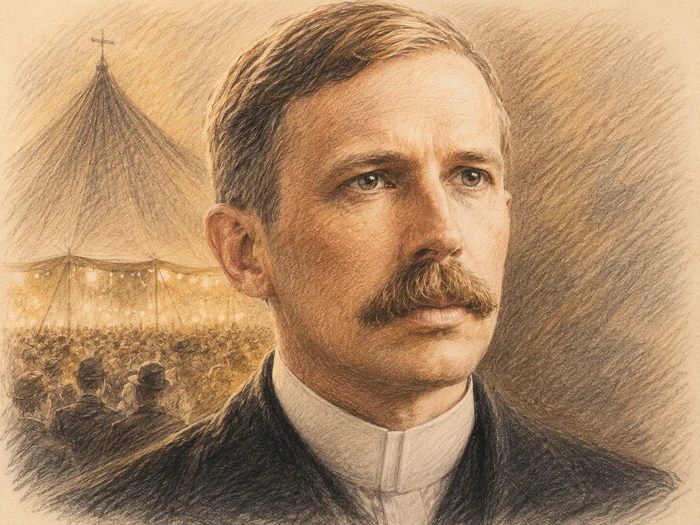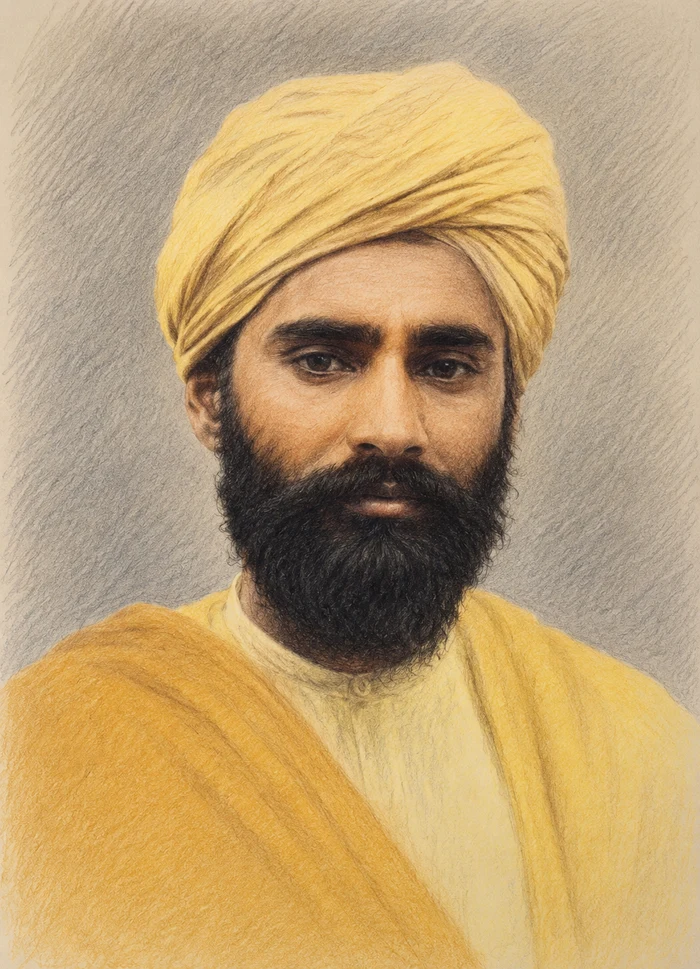
Converted from Sikhism, preached Christ while wearing the robes of an Indian sadhu — a faith embodied in the country's own culture.
Sundar Singh was born on September 3, 1889, in northern India, into a Sikh family — a religion that combines elements of Islam and Hinduism. He attended a primary school run by American missionaries, where he heard the Scriptures read daily, but considered them false and once publicly burned a copy of the Gospels.
At age 14, he lost his mother — a loss that left him deeply embittered. In December 1903, in a moment of despair, he asked God to reveal himself, if he truly existed. According to his own account, his room filled with light and a figure appeared to him saying, "How long will you deny me? I died for you." Sundar fell to his knees, overcome by a peace he had never felt. Despite strong opposition from his family, he was baptized on his own 16th birthday, in 1905.
In October 1906, Sundar Singh put on the turban and saffron-colored robe of a sadhu — an itinerant ascetic, a figure recognized and respected throughout India — and began preaching Christ in that form, traveling through various regions of the country and facing constant persecution. Christian communities began calling him "the apostle of the bleeding feet." He briefly studied for Anglican ordination but couldn't adapt to rules he considered foreign to the gospel India needed — for him, the Christian message needed to be expressed in a genuinely Indian way, not imported from outside.
Between 1918 and 1922, Sundar Singh traveled through different countries recounting his experiences and visions, becoming one of the most recognized faces of Indian Christianity in the Western world. Back in India, he wrote eight books, originally in Urdu — among them, "At the Master's Feet" (1922), one of his most widely read. His last known letters date to April 1929, when he set out toward Tibet and was never seen again; he is presumed to have died shortly after. His life remains a rare example of a Christian faith deeply embodied in Indian culture, without losing any of its fidelity to the gospel.